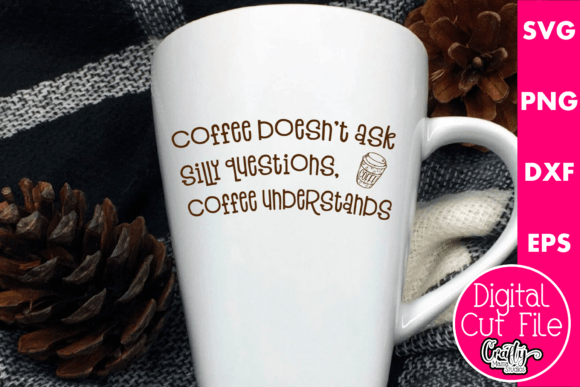
Coffee Doesn’t Ask Silly Questions
As an experienced embroidery designer and product reviewer, I’ve had the chance to work with countless digital embroidery files. Some are just okay—functional but forgettable. Others stand out for their cleverness, versatility, or visual charm. Coffee Doesn’t Ask Silly Questions falls into that latter category. It’s not just a design; it’s a personality in stitches.
A First Impression That Sticks
The phrase itself is witty and relatable, which immediately makes it appealing for any project that leans on humor or lifestyle branding. The design layout is clean, with a well-balanced composition of text and subtle coffee-themed graphics. It reads easily from a distance and retains its charm up close. The font choice is friendly but professional, making it suitable for both casual and commercial applications.
What stands out most is how the design feels like it was made for real-world use. The elements are scalable, the spacing between letters is thoughtful, and there’s no unnecessary clutter. This is a file that understands its purpose: to deliver a message with style while staying practical for stitching across different projects.
Where This Design Shines
Coffee Doesn’t Ask Silly Questions works beautifully on a wide range of items. Here are some of the best real-life uses I've considered:
- Tote bags: A personalized tote with this quote stitched in satin or fill stitch looks great and adds instant character. It’s perfect for customers who want something light-hearted yet meaningful for everyday carry.
- Sweatshirts and t-shirts: The design’s boldness translates well onto soft goods. For a sweatshirt, using a slightly larger hoop size and higher stitch density ensures durability and visual impact.
- Baby clothes and nursery decor: While the theme isn’t overtly baby-friendly, the gentle tone and clear lettering can be adapted with softer colors and smaller scale for cute, minimalist designs.
- Embroidered patches: This design has a natural presence when turned into a patch. Its clarity and structure make it ideal for adding to denim jackets, backpacks, or even custom pet bandanas.
- Aprons and kitchen towels: The coffee motif pairs perfectly with culinary-related products. Stitched onto a linen apron or a cotton tea towel, it brings a touch of fun to functional items.
- Holiday gifts and seasonal décor: During the holidays, this design can be paired with festive color palettes or used as part of a themed collection. Think embroidered gift tags or holiday mugs with matching cut files.
It also holds up well in printable mockups, especially for Etsy sellers or boutique brands looking to showcase finished products online. The SVG, EPS, DXF, and PNG formats included in the digital download mean you can create both physical and digital representations with ease.
Design Notes for Real Projects
Before jumping into production, I always test a new design on scrap fabric. With Coffee Doesn’t Ask Silly Questions, I noticed that the detail level remains consistent across multiple fabrics, though stitch density may need adjustment depending on the material.
One thing I recommend is checking thread color contrast against your chosen fabric. Since the design features text and simple shapes, using a dark thread on a light background (or vice versa) will enhance visibility and make the finished product pop. If you're planning to use it in black and white, run a quick test to see if the details still come through clearly.
Also, consider the hoop size. While the exact dimensions aren’t specified, it’s safe to assume that the design requires at least a medium-sized hoop to maintain its proportions. For commercial embroidery, confirming compatibility with your machine and software is essential.
Using the right stabilizer is another key factor. On stretchy or thin fabrics, especially those intended for frequent washing, a tear-away or cut-away stabilizer will help keep the design intact over time. For heavier materials like canvas or denim, a bit less stabilization might be needed, but testing is always a good idea.
When to Proceed with Caution
Despite its strengths, there are scenarios where Coffee Doesn’t Ask Silly Questions might require extra attention:
- Small hoop sizes: If you plan to shrink the design significantly, watch out for tiny lettering and intricate corners that could get lost in translation.
- Textured or stretchy fabrics: These can cause distortion or uneven stitching. Always do a test piece first to ensure the design maintains its shape and legibility.
- Dark backgrounds: The design relies on contrast to shine. On dark fabric, opt for a light-colored thread or consider using a reverse applique technique to highlight the words.
- Curved surfaces like caps: The layout is linear, so adapting it for curved embroidery without losing clarity can be tricky. You might need to adjust the placement or simplify the corners.
- Dense stitch areas: The central text area is more densely stitched than the outer graphic elements. Monitor tension settings to avoid puckering, especially on delicate fabrics.
For layered garments or items that will be washed frequently, inspect the edges of the design to ensure they won’t fray or lose definition after repeated use. In these cases, reinforcing with a running stitch or backstitch around the perimeter can be helpful.
Customer Appeal and Branding Potential
This design does more than look good—it connects. People love coffee, and they appreciate humor in their handmade products. Coffee Doesn’t Ask Silly Questions taps into both, making it a strong contender for personalized gifts, small shop merchandise, or craft business branding.
Its visual appeal is high enough to attract buyers on Etsy or at craft fairs, but it doesn’t feel gimmicky. Instead, it feels authentic and relatable, which is exactly what customers are looking for in today’s market. When added to a tote bag design or sweatshirt embroidery, it elevates the product value and helps build customer trust by showing thoughtfulness in the design process.
From a brand perspective, the design’s simplicity supports brand consistency. Whether you’re creating a line of holiday gifts or building a collection of nursery decor, this design can be reused across various color schemes and product types without feeling repetitive.
Designer Tips for Success
To get the most out of Coffee Doesn’t Ask Silly Questions, here are a few practical tips based on my experience:
- Always test the design on a sample of your actual fabric before committing to a full batch.
- Review stitch density settings to match the thickness and texture of the material you're working with.
- Confirm the recommended hoop size from the creator or conduct your own tests to prevent shifting during embroidery.
- Inspect small details like apostrophes and quotation marks to ensure they don’t disappear in the final stitch-out.
- Use proper stabilizer—especially important for commercial embroidery where quality and longevity matter.
- Test the design in both color and black-and-white to see how it behaves under different lighting conditions or when printed digitally.
- If you plan to sell finished products or digital embroidery files, double-check licensing terms to stay compliant.
Final Thoughts on Real-World Use
Coffee Doesn’t Ask Silly Questions is one of those rare machine embroidery designs that feels ready for the world. It doesn’t demand a lot of embellishment or special handling, but it delivers solid results across a variety of handmade products and custom apparel projects.
Whether you're an embroidery project enthusiast or a seasoned digital product seller, this design offers a nice balance of humor, readability, and adaptability. It fits naturally into the Graphics and Crafts categories, and its potential extends far beyond a single application.
In short, it's a design that understands what coffee lovers—and good designers—need: clarity, charm, and a little bit of personality in every stitch.